What a commissary is under the FDA Food Code and why it exists
A commissary, as defined by the FDA Food Code and mirrored in most state and local rules, is a permitted commercial kitchen or facility that provides essential support and infrastructure to food trucks and mobile vendors. This is not just a convenience for vendors but a regulatory requirement in almost every major metro area. Health departments want to see that mobile operations have access to the same sanitation, storage, and preparation facilities as any brick-and-mortar restaurant.
The reason is straightforward. Mobile units have limited space for safe food preparation, dishwashing, water storage, and waste management. Commissaries fill this gap. Without them, mobile food vendors would struggle to meet the same public health expectations as stationary establishments. Inspectors know that food safety depends on procedures set up before the truck pulls to the curb, not just what happens during service hours.
When a health inspector reviews a license application, they look for a formal arrangement with a commissary. A handshake is not enough. The agreement must be written, explicit about services provided, and signed by both parties. The inspector's job is to ensure the commissary is real, available, and meets every requirement.
Keep reading: How to Pass a Fire Marshal Inspection on a Propane Food Truck
The four services a health department expects the commissary to cover
Health departments consistently expect four key services from any commissary supporting a food truck or mobile vendor. These are not just suggested best practices but minimum requirements in most metro areas. Each service directly relates to risks flagged by health inspectors, and each must be spelled out in the agreement.
- Potable water supply: The commissary must provide a safe, approved source of drinking water for filling the truck's tanks. This helps prevent cross-contamination and ensures compliance with safe water standards.
- Wastewater and grease disposal: The commissary must have a legal, sanitary method for accepting the gray water and grease drained from the food truck. Improper disposal is a major violation and draws fines.
- Food storage: Both dry and cold storage are required. The commissary needs to provide dedicated, labeled space where ingredients and prepped items can be stored at proper temperatures.
- Food preparation and cleaning: The commissary has to offer NSF-listed prep areas, commercial sinks for dishwashing, and a place to clean utensils and equipment. Prep done in a home kitchen or unapproved space is almost always prohibited by code.
These requirements are not negotiable. An inspector will expect to see them clearly addressed in your agreement and will often verify them during the initial inspection or follow-up visits.
Potable water fill, gray water dumping, and the records that prove it
Water in and water out: what matters to inspectors
Every food truck must start the day with a full tank of potable water and finish the day by dumping gray water legally. The commissary is the only place most health departments allow these activities. Home hoses and public drains are strictly off limits. The water fill station has to be protected from backflow, and the gray water dump must tie into a permitted sanitary sewer or holding tank, not just a storm drain or mop sink.
Documenting use: logs and signatures
Inspectors will ask for proof that trucks are actually using the commissary for water and waste. Many require a logbook kept at the commissary. This sheet lists each truck, date, and a signature showing when water was filled and wastewater dumped. The commissary manager or an authorized employee signs off. Some jurisdictions now accept digital logs, but the principle is the same. If you cannot show these records, the inspector can cite you or even suspend your permit pending correction.
For trucks with high volumes or multiple shifts, it is smart to keep personal copies of these logs. That way, if there's a question during a surprise inspection on the street, you have evidence ready. A missing log is one of the most common paperwork problems for new operators.
Keep reading: Food Truck or Concession Trailer: Cost, Permits, and Parking
Overnight parking, cold storage, and where prep is legally allowed
Parking and storage: not always included
Not every commissary allows overnight parking for trucks. Some offer it as an extra service, others do not have the space or zoning. If overnight parking is included, make sure the agreement spells out exactly where and when the truck can be parked. The inspector will want to see that the truck is stored securely and is not a nuisance to neighbors.
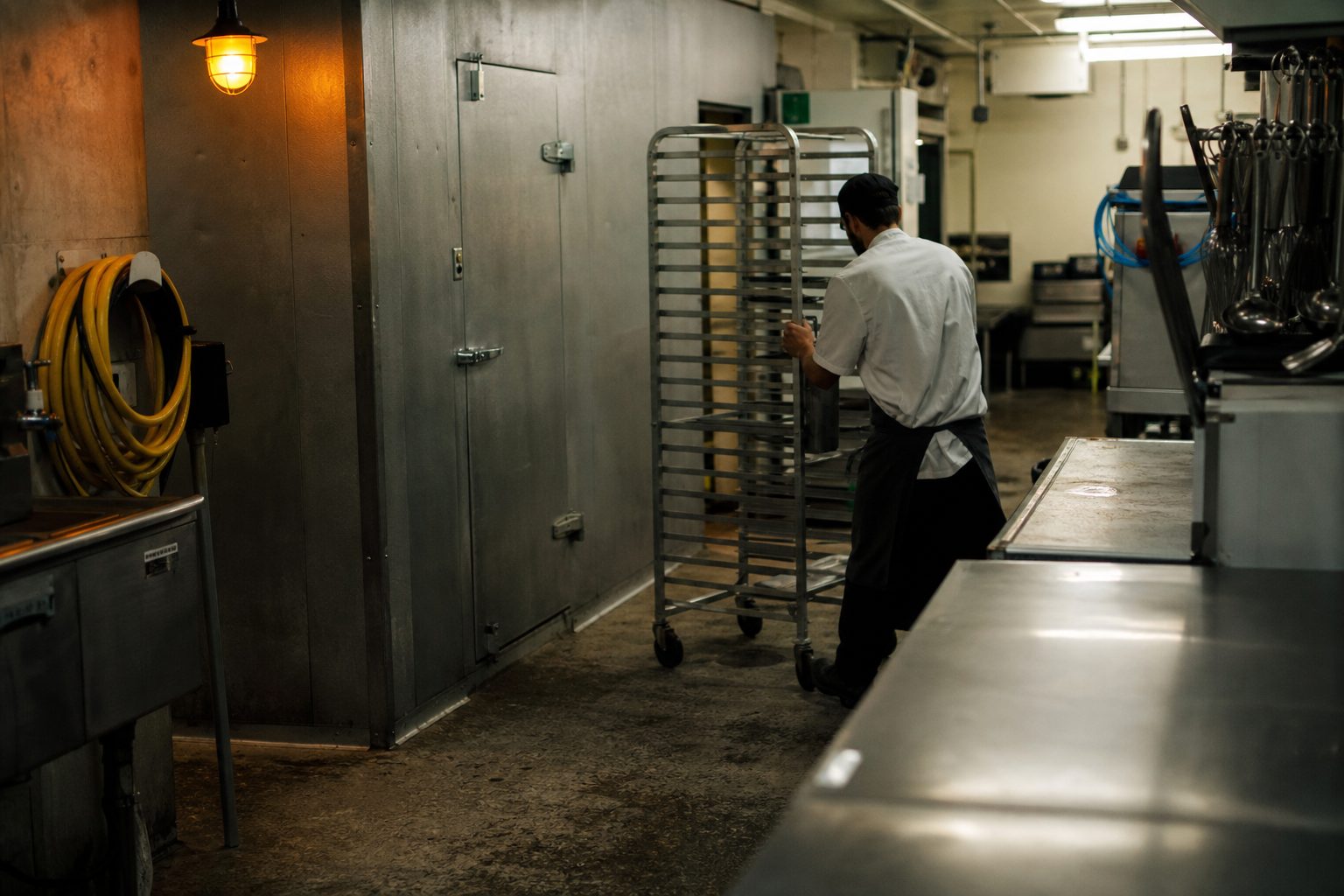
Cold storage is mandatory for most trucks, especially those holding perishable items overnight or between shifts. The commissary must provide reach-in or walk-in coolers that are monitored for temperature and labeled for each vendor. Health departments frequently check these coolers for both temperature control and cross-contamination risks. Keeping raw and ready-to-eat foods separated is as critical in the commissary as it is on the truck.
Food prep: no shortcuts
Most jurisdictions prohibit food prep in any location except a licensed, inspected commissary or commercial kitchen. This means no prepping at home, in the truck itself (except for final assembly), or in unapproved areas. The agreement should specify that prep space is available, along with commercial sinks and work tables. Inspectors will walk the commissary during your initial application and may revisit regularly to check that prep is happening in the right spot.
What a signed commissary letter needs on it before you submit the packet
The commissary letter is the linchpin of your licensing packet. Most health departments publish a template or checklist, but inspectors will accept any letter that covers the required bases. A vague or incomplete letter is a fast track to delays or outright rejection.
- Names and contact info: The letter must list the legal name of your food truck business, the owner or responsible party, and the commissary's full name, address, and phone number.
- Specific services: It should check off each of the four required services: water, waste, storage, prep. If any services are excluded, that must be stated plainly.
- Authorized signature: The commissary manager or owner must sign and date the letter. Some agencies require this be notarized, but most accept a simple signature.
- Term of agreement: List start and end dates. Health departments want proof the arrangement will last for the full permit period, usually a year.
- Permit numbers: If either the truck or commissary has a health permit number, include it. This cross-references the records inspectors use to verify legitimacy.
Most departments want this letter submitted with the initial application, not after the fact. Review it line by line before submission. A missing service or unsigned letter can set you back weeks during the busy season.
See how CurbsideDrop handles this for food trucks and street food
Shared kitchens, restaurant back doors, and church halls compared
Commissary types: pros and cons
Food truck commissaries come in several forms: dedicated shared-use kitchens, arrangements with operating restaurants, and community spaces like church kitchens. Each has upsides and drawbacks, both for compliance and day-to-day operations.
Shared-use kitchens are purpose-built for mobile vendors, offering all required services plus extras like ice machines, dry storage, and 24-hour access. They usually have established logs, clear rules, and staff who know what inspectors want. The downside can be competition for space during peak hours, and sometimes higher monthly fees.
Restaurant partnerships are common, especially for trucks that operate off-hours. These can be economical if you have a good relationship, but they can create friction if the restaurant's priorities change. Inspectors sometimes scrutinize these more closely, checking that the truck is not just "borrowing" the address. Make sure your agreement spells out your access rights and does not depend on a handshake with the chef.
Church and community center kitchens are more common in smaller cities or for nonprofit vendors. They can be affordable and flexible, but not all are licensed or equipped for commercial use. Inspectors will ask to see proof of commercial licenses, including food manager certificates and proper equipment. Always check with both the health department and the facility manager before signing on.
Red flags for inspectors
Inspectors are wary of arrangements that look like paper-only deals. If the commissary is rarely used, hard to access, or not equipped for the volume of your operation, they may dig deeper. Shared kitchens with many vendors need clear logs to show each truck's activity. Restaurant and church spaces must be genuinely available during required prep and cleaning hours, not just for paperwork. If you cannot show that the commissary is providing all four services, expect follow-up questions or even a site visit.
Renewal season and what happens when your commissary closes
Annual review: not just a rubber stamp
Each year, usually before your permit expires, you must submit a new commissary agreement or renewal letter. Health departments use this as a checkpoint. They look for lapsed agreements, missing services, or changes in facility ownership. Failing to update your agreement can lead to a suspension or delayed renewal. Mark your calendar for renewal deadlines, which are often set by the date on your original permit, not the calendar year.
When the commissary closes: emergency steps
If your commissary shuts down, changes ownership, or stops providing a service, you are required to notify the health department immediately. Operating without a valid commissary is a serious violation. Most departments will give a short grace period, sometimes just a few days, to find a replacement, but you cannot operate until a new agreement is in place and approved. Some operators keep a backup commissary relationship on file for emergencies, but this is not always practical in crowded metro areas.
During renewals, inspectors may visit the commissary unannounced or request recent water and waste logs. Any gap in service or inaccurate records can trigger additional paperwork, fines, or even a temporary shutdown. Staying ahead of renewal paperwork keeps your business on the street and out of bureaucratic limbo.
Managing commissary paperwork and compliance can be tedious, especially with ever-changing locations and menu updates. Many operators now use digital tools that consolidate documents, schedule updates, and broadcast daily locations to customers and regulators alike. Keeping everything organized makes inspections smoother and lets you focus on food and service instead of chasing signatures and logs.