Purchase price and build out cost for each format
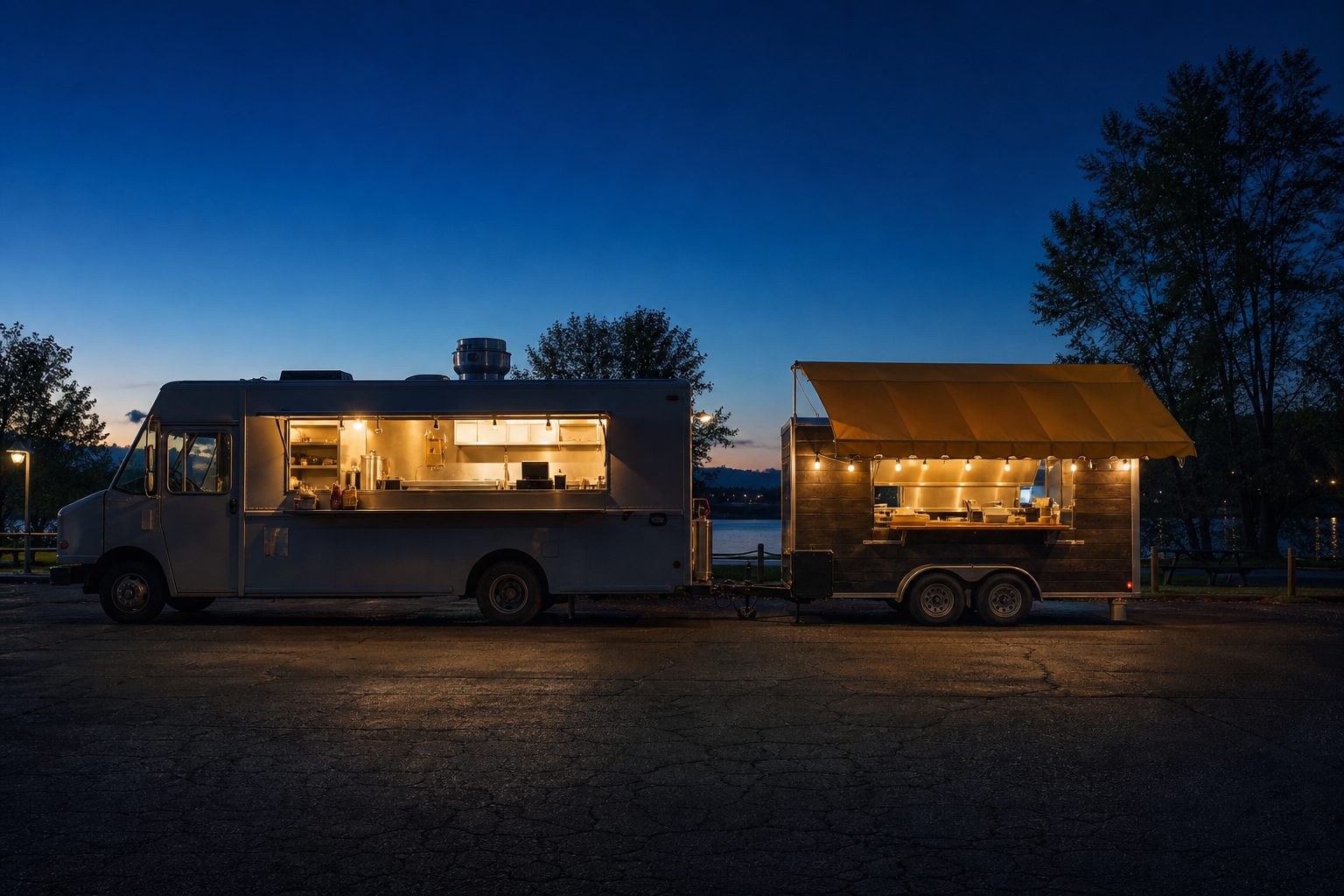
When weighing food truck versus concession trailer, the first shock comes with the sticker price. A full-size food truck costs more up front than a trailer of similar size and layout. Most new food trucks are built on used step vans, with the kitchen installed by a builder. The van itself is part of the cost, and newer, bigger platforms mean higher prices. Trailers, by contrast, start with a frame and shell built to order or as a converted cargo trailer. This can mean a lower entry point, especially for operators with fabrication skills.
The build out for both formats can get expensive fast. Commercial kitchen equipment, fire suppression, plumbing, and electrical systems run similar for either. But some cities require extra gear for trucks, such as backup cameras or secondary batteries, which can add to the total. On the flip side, a trailer's price tag might look lower but remember to budget for the generator, propane tanks, and tow package, which sometimes are not included.
If you are aiming for a fully custom layout, expect the labor cost to be higher on a food truck. Working inside a finished van is trickier for builders than starting from a blank trailer shell. DIY saves money, but local regulations may require licensed trades for gas, electric, and fire systems. Used units are available for both types, but it is easier to find food trucks ready to work than fully built trailers with the right permits.
Keep reading: Break-Even Math for a Six-Hour Food Truck Lunch Service
Tow vehicle requirements, license class questions, and insurance
Trailers trade off lower initial investment for more moving parts on the road. A food truck is both kitchen and vehicle. With a trailer, you need a tow rig capable of safely hauling your loaded kitchen. For small trailers, a half-ton pickup might be enough, but larger builds often need a heavy-duty pickup or even a one-ton dually.
Tow Vehicle and Driving Requirements
The cost of a suitable tow vehicle has climbed in recent years. Some operators already own a truck, but most find they need to buy or lease. Towing brings its own set of risks, especially in cities with tight turns and heavy traffic. Maneuvering to and from events can be challenging, and parking a trailer often takes more time.
License class questions can trip up new owners. Most states allow you to drive a food truck with a standard driver's license, as long as the truck falls under the weight limit. Trailers over a certain weight, often 10,000 pounds loaded, can require a commercial driver's license. Rules vary by state, so check carefully before committing to a big trailer.
Insurance Factors
Insurance costs and coverage types differ. A food truck is insured as a commercial vehicle, typically with combined kitchen and vehicle coverage. For a trailer, you need insurance for the trailer, the vehicle towing it, and often a separate policy for contents and liability. Claims for damage or theft can be more complicated with a trailer, since it is treated as separate from the tow rig.
How health departments classify trailers versus self contained trucks
Health department regulations present one of the biggest divides between trucks and trailers. Both need to meet food safety standards, but the devil is in the details. Some health departments treat trailers as temporary food facilities, while food trucks are classified as mobile food units. This can affect the inspection schedule, water requirements, and commissary use.
A self-contained food truck, with its own water and waste tanks, often gets more flexibility. Many cities let trucks park and operate without returning to a commissary every night, as long as their tanks and refrigeration are up to code. Trailers, on the other hand, are sometimes required to check in at a commissary daily for water, waste, and prep, especially if they lack built-in tanks.
Operators should expect additional paperwork for trailers in some jurisdictions. For example, a trailer may need a separate approval for each event or location, while a licensed truck can roam more freely within city limits. Health inspectors may also scrutinize trailers more closely for temperature holding, hand washing, and cleaning, especially if the trailer is not fully enclosed or climate controlled.
If you plan to operate in multiple counties or states, check the classification rules in each location. Some areas issue state-level permits for self-contained trucks but require individual event permits for trailers. This can add to your administrative load and slow your ability to move between markets.
Keep reading: The 40-Minute Pre-Service Checklist for a Mobile Kitchen
Parking, curb access, and the footprint an event will give you
Parking is where food trucks often shine. City rules and event organizers tend to favor self-propelled units that can slip in and out of tight spots. Trucks can load in quickly, park along curbs, and clear out at closing with minimal fuss. Trailers, especially longer ones, have a much harder time in congested urban settings.
Event Footprint and Space Needs
Events allocate real estate carefully. Trucks usually get a standard parking space, sometimes two. Trailers need extra room for the rig's length and the tow vehicle, which often cannot remain hitched during service hours. This means you may be parked farther from high-traffic areas, or face limits on where you can set up.
Street vending permits are another concern. Some cities issue more permits to trucks than trailers, and in dense areas, curb space is at a premium. Food trucks can parallel park in spots where trailers would block traffic or violate parking restrictions. Event organizers may require you to unhitch and move your tow vehicle, adding set-up and breakdown time.
Access at Night and During Emergencies
Late-night service or quick departures can be a pain point for trailers. If you need to leave in a hurry, re-hitching a trailer in the dark is riskier than starting a truck and driving off. In weather emergencies or last-minute cancellations, trucks have the edge in mobility.
Maintenance, breakdowns, and what a dead engine costs on a Saturday
Keeping a food truck or trailer on the road requires a different approach. A food truck is a single, integrated unit, so when the engine or transmission fails, your entire operation stops. An engine breakdown means lost sales, often on high-dollar weekends or festivals. Towing and repairs for commercial trucks can get expensive and take days, especially if replacement parts are scarce.
Separation of Vehicle and Kitchen
Trailers offer a backup plan. If your tow vehicle fails, you might borrow or rent another truck to keep your kitchen rolling. The kitchen itself is not sidelined by engine trouble. This flexibility can save your weekend if you have access to a second tow vehicle or a friend in the business.
Routine maintenance costs also differ. Food trucks need regular oil changes, brakes, tires, and transmission work, plus upkeep on kitchen equipment. Trailers need wheel bearings, brakes, and tires maintained, but the kitchen is not at risk if the tow vehicle is out of commission. On the other hand, a trailer may see more wear on its running gear if it is moved often.
Emergency Repairs and Workarounds
Field repairs are easier with a trailer. If a generator quits or a tire blows, you can focus on just the trailer systems without worrying about the vehicle. For trucks, a breakdown can mean a scramble to transfer product and cancel scheduled stops. Some operators keep a backup generator or spare parts on hand, but few can afford a second truck.
See how CurbsideDrop handles this for food trucks and street food
Resale value and the used market for each format
When it comes time to exit or upgrade, food trucks and trailers trade differently. Food trucks have a larger used market in most metro areas. Buyers are often looking for ready-to-roll units, and a truck with a solid maintenance record and working kitchen can sell quickly. Older trucks with engine problems or outdated layouts may sit on the market longer.
Trailers attract a different kind of buyer. The lower entry price appeals to newcomers, but the pool is smaller, especially for larger or highly customized trailers. It is easier to sell a trailer if you can offer the tow vehicle as a package deal. Otherwise, buyers must have or acquire a suitable truck, which can slow down a sale.
Depreciation patterns differ as well. Food trucks lose value fastest in the first few years, especially if the vehicle platform is nearing the end of its road life. Trailers, with no engine or drivetrain, can stay viable longer, as long as the kitchen equipment is up to date and the frame is sound. In some cases, trailers can be repurposed for other uses, from mobile retail to catering, giving sellers more options.
Documentation matters for both formats. Keep records of all upgrades, repairs, and inspections. A clean title, detailed maintenance log, and current permits make both trucks and trailers easier to sell. Buyers shy away from units with missing paperwork or out-of-date registrations.
Matching the format to your service model and your city
Choosing between a food truck and a concession trailer is not just about the numbers. Your menu, target locations, and style of service all play a role. Fast-moving urban lunch routes favor food trucks, which can jump between stops and park in tight spaces. Trailers fit best for festivals, fairs, and static events where set-up time is less critical and you want more kitchen space for the money.
If your city has strict parking rules or a crowded downtown, a self-contained truck makes daily ops smoother. For operators with access to a reliable tow vehicle, a trailer saves on up-front costs and offers redundancy if the truck breaks down. If you do most of your business at large events or private bookings, the trailer's bigger kitchen and flexible layout may be the better fit.
Permitting and health inspections are a major factor. Mobile food units with their own water and power systems avoid many of the headaches trailers face in cities that require daily commissary returns. If you plan to serve in multiple jurisdictions, research the red tape each format brings before you buy.
Finally, consider how you will keep your customers informed. Both trucks and trailers change locations and menus frequently. A tool that broadcasts your daily spot and specials to your SMS list, updates your map page, and posts captions to your socials can keep your regulars in the loop, no matter what rolls up to the curb.