Running daily in 38 US metro areas

Drop today's corner and today's menu to every regular in nine seconds.

CurbsideDrop takes one short post and turns it into a text to your list, a live pin on your public map page, and finished captions for Instagram and Facebook. The line starts building while your flat top is still coming up to temperature.

1,340 trucks send a drop every service day

Texts land in 38 seconds on average

Set up between lunch and dinner service

Today: 11:15 to 2:00
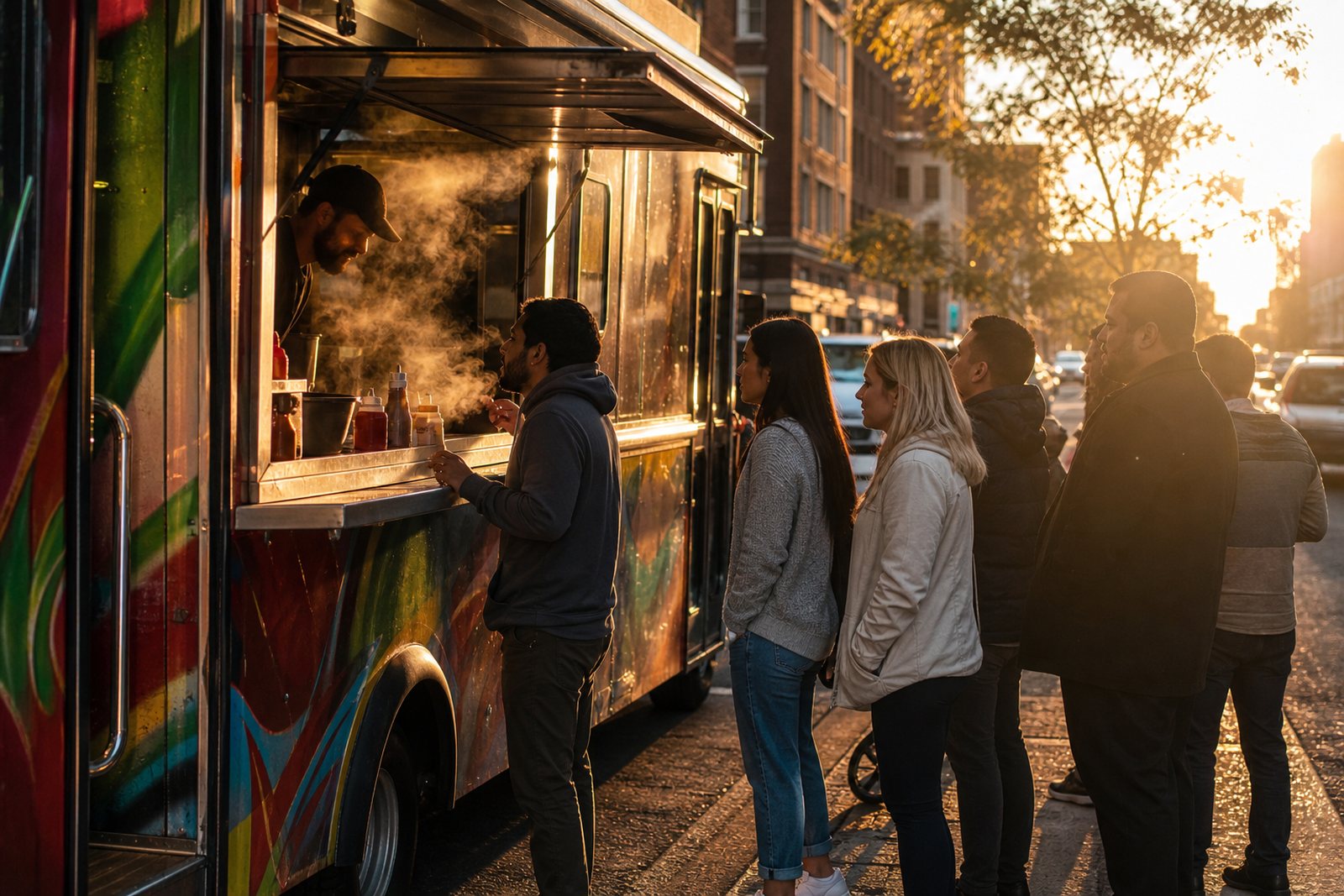
Cooks handing food through the window of a bright food truck to a line of customers on a city street at golden hour
Sent to 2,914 regulars
Drop 12:04 p.m. Ninth and Colorado, 2,914 texts, 611 tapped directions in the first hour.

The 11:40 scramble

You are prepping, driving and permitting. Then you remember nobody knows where you are.

Every mobile operator we talk to describes the same twenty minutes: generator on, cambros loaded, and a phone in a greasy hand trying to write three different posts before the first ticket. Here is what that costs.

The post goes out after the rush starts

A stop that opens to an empty curb still burns the same prep. Forty five minutes of idle labor at two people plus wasted par cook runs about $118 a service, and the tickets you miss between 11:30 and 12:15 are the highest margin ones you sell all day.

About $118 per quiet open
Regulars drive to yesterday's lot

Nothing kills a repeat customer faster than a wasted lunch break. Operators tell us they used to answer 20 to 30 messages a week that all said the same thing: where are you today. Each of those is a customer who almost gave up.

20 to 30 lost trips a week

Three channels, three different stories

The story says the brewery lot, the page still shows the office park, and the website has last month's permit schedule. Crews average 14 minutes a day rewriting the same information for each app, which is 71 hours a year of unpaid marketing work.

71 hours a year retyping

Weather moves you and nobody hears

A rain call posted in one place reaches maybe a third of the people who planned their day around you. The other two thirds show up to an empty spot, and about 1 in 5 of them stop checking your feed for good.

1 in 5 followers goes quiet

A truck is a restaurant that changes its address every day. The kitchen is the easy part. Telling 3,000 people the new address, before the smell of the griddle can do it for you, is the job that never fits in the schedule.

One drop, three channels

Four taps at the prep table, then get back to the griddle

A drop is one short broadcast that carries your stop, your hours and your menu. You build it once. CurbsideDrop delivers it to the people who asked to hear from you, refreshes your public map page, and hands you captions you can paste without rewriting a word.

01

Pick the corner

Tap a saved lot from your own corner book. Every entry holds the cross streets, the gate code, the permit number, the power situation and the hours you are cleared to serve, so you are not retyping an address with one hand.

02

Call the menu

Your board lives in the app. Tap the items running today, mark the two specials, and set anything you are short on. Sold out items grey out the second you flip them, on the map page and in the next text.

03

Hit drop

One button sends the text to your list, publishes the pin and the hours to your map page, and queues the Instagram and Facebook captions with the corner and the menu already written in. Median time from tap to sent is nine seconds.

04

Watch the board

The drop report shows how many texts delivered, how many people tapped directions, and which menu line pulled the most taps. By Sunday you know which corners and which items are actually paying for the diesel.

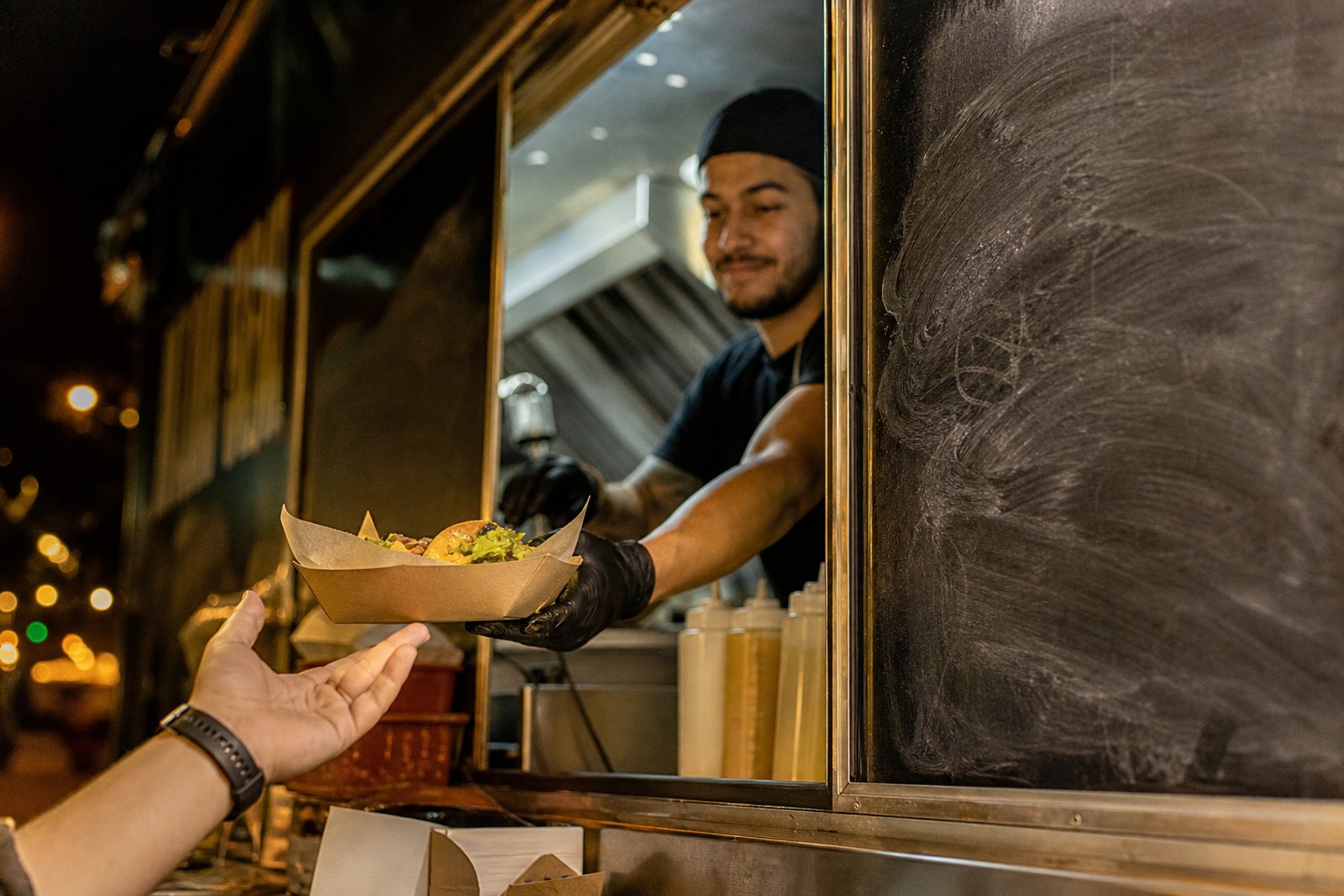
A cook handing a paper tray through a food truck service window beside a chalkboard menu under evening street lights

What is in the app

Built for a kitchen that moves every day

No dashboards you will never open. Six things a mobile operator actually touches between load in and last call.

Your corner book

Save every lot, brewery, office park, commissary slot and festival row you work, with the permit number, the gate code and the hours you are cleared for. Drivers pick a saved corner instead of typing an address into a phone at a red light.

Sold out in one tap

When the birria goes, flip it and the whole network hears. The map page strikes the line, the next text carries the change, and the caption queue rewrites itself so you are not selling something you ran out of at 1:40.

A text list that stays legal

Double opt in at the window with a printed short code card, automatic STOP and HELP handling, and 10DLC brand and campaign registration filed for you so carriers do not throttle your sends. Quiet hours are enforced by default in the recipient's own time zone.

A live map page people bookmark

Every truck gets a public page at curbsidedrop.com with today's pin, the hours, the menu and a directions button that opens the phone's own map app. It updates the instant you drop, so office crews can check it at 11:20 and plan lunch around you.

Captions already written

The caption queue builds the Instagram and Facebook post from the same drop: corner, cross streets, hours, today's items and the two specials, in your own house voice. Copy it, add your photo of the tray, and you are done before the first ticket prints.

The rain call button

Weather, a broken fryer, a lot that got double booked: one tap sends a cancellation with the reason and a make good, and pulls the pin off the map page. Trucks that send a rain call keep 3 in 4 of those customers for the next service instead of losing the week.

What changes on the curb

Numbers our operators can point at

These are medians from 1,340 trucks broadcasting through CurbsideDrop across the 2025 season, measured against their own first thirty days before the switch.

9 sec

From tap to sent

The drop screen holds your saved corners and your live board, so there is nothing to type. Median time from opening the app to a delivered text is nine seconds, which is short enough to do it with the generator running.

22 min

Earlier first line

Because the text arrives before people decide where to eat, the first queue forms 22 minutes earlier than it did on social posts alone. That pulls tickets into the window when your food is at its best and your crew is fresh.

$640

Added weekly revenue

The median single truck books about $640 more per week. It comes from three places: an earlier rush, fewer dead stops on slow corners, and specials that sell out because 2,900 people heard about them at 11:04 instead of 12:30.

71%

Fewer where are you messages

When the map page answers the question, the direct messages stop. Owners report a 71 percent drop in one to one location questions, which gives the person on the window back roughly four hours a week of actual service time.

From the window

Operators who park for a living

Three owners who send a drop before every service, in their own words.

I used to post at 12:20 and wonder why the line hit at 1:00. Now I drop at 10:55 from the commissary and there are people standing at the corner when I set the cones. Last Thursday I sold out of quesatacos by 1:15 and still had an hour of service left for the rest of the board.

Marisol Cabrera Owner, Birria Malinche, Austin, Texas

Brisket is a commitment you make at four in the morning. If I cook 90 pounds and the lot is dead, that is my whole week. The text list means I know the crowd is coming before I light the pit, and the sold out button keeps people from driving over for something I do not have.

Devin Pruitt Pitmaster and owner, Smoke Ordinance BBQ, Kansas City, Missouri

We run two trucks and a trailer on three schedules, and I was the bottleneck for every post. My drivers now send their own drop from the cab and I read one report on Sunday. Our September was the first month we cleared payroll without me doing marketing at midnight.

Ayana Whitfield Co-owner, Third Shift Waffle Co., Portland, Oregon
1,340trucks and carts broadcasting every service day
6.2 millionstop and menu texts delivered during 2025
94%of lunch drops sent before 10:45 in the morning

Plans

Priced like a case of tortillas, not like software

Every plan carries the text list, the live map page, the caption queue and the drop report. What changes is how many trucks you run and how many texts you send.

Single Truck

$19 per month

For one truck, cart or trailer with one schedule.

  • 1,500 outgoing texts each month
  • Unlimited saved corners and menu items
  • Live map page with a directions button
  • Instagram and Facebook caption queue
  • 10DLC registration filed and paid by us
  • Window cards and a QR sign up sheet
Request a walkthrough
Most operators pick this

Fleet

$49 per month

For two to six trucks working different corners on the same day.

  • Everything in Single Truck, for up to six vehicles
  • 6,000 outgoing texts each month, pooled
  • Driver logins that can drop but cannot edit billing
  • Shared corner book with permit and gate notes
  • Rain call button with automatic make good text
  • Sunday drop report by truck, corner and item
Request a demo

Commissary

$99 per month

For commissary kitchens, festival groups and vendor collectives.

  • Unlimited trucks under one kitchen account
  • 20,000 outgoing texts each month, pooled
  • Festival mode: one lot, many vendors, one map
  • Day sheet that prints the whole lineup by hour
  • CSV export and a read only API key
  • Named support contact who answers on Saturdays
Request a quote

Every plan is billed monthly in US dollars and can be cancelled at any time from the account screen, with no exit fee and no term commitment. Extra texts are 1.1 cents each past your monthly pool, and we email you at 80 percent so nothing surprises you. Prices exclude any sales tax your state applies.

Straight answers

Questions we get at the window

If yours is not here, write to us and a person who has worked a service window will answer.

Service Window

The magazine we write for people who run a window

Reporting on the working life of American food trucks: permits, propane, plate costs, and the curb you park on. Nine reports, checked against operators who live with the numbers.

Read Service Window

Get on the schedule

Tell us where you park. We will build your first drop with you.

Fifteen minutes on the phone, your corners loaded, your board typed in, and one live drop sent before you hang up.

We answer every request ourselves, usually the same service day and always within one business day. If you are in the middle of a rush when we call, say so and we will call back after close. Nothing here starts a charge, and we do not put you on a mailing list you did not ask for.

  • Your first ten corners loaded for you
  • Menu board built from a photo of your board
  • Window cards and QR sign up sheet in the mail
  • Carrier paperwork filed on your behalf

A real person reads this, usually between services. Prefer email? Write straight to jimenezjulien42@gmail.com and tell us your corners.