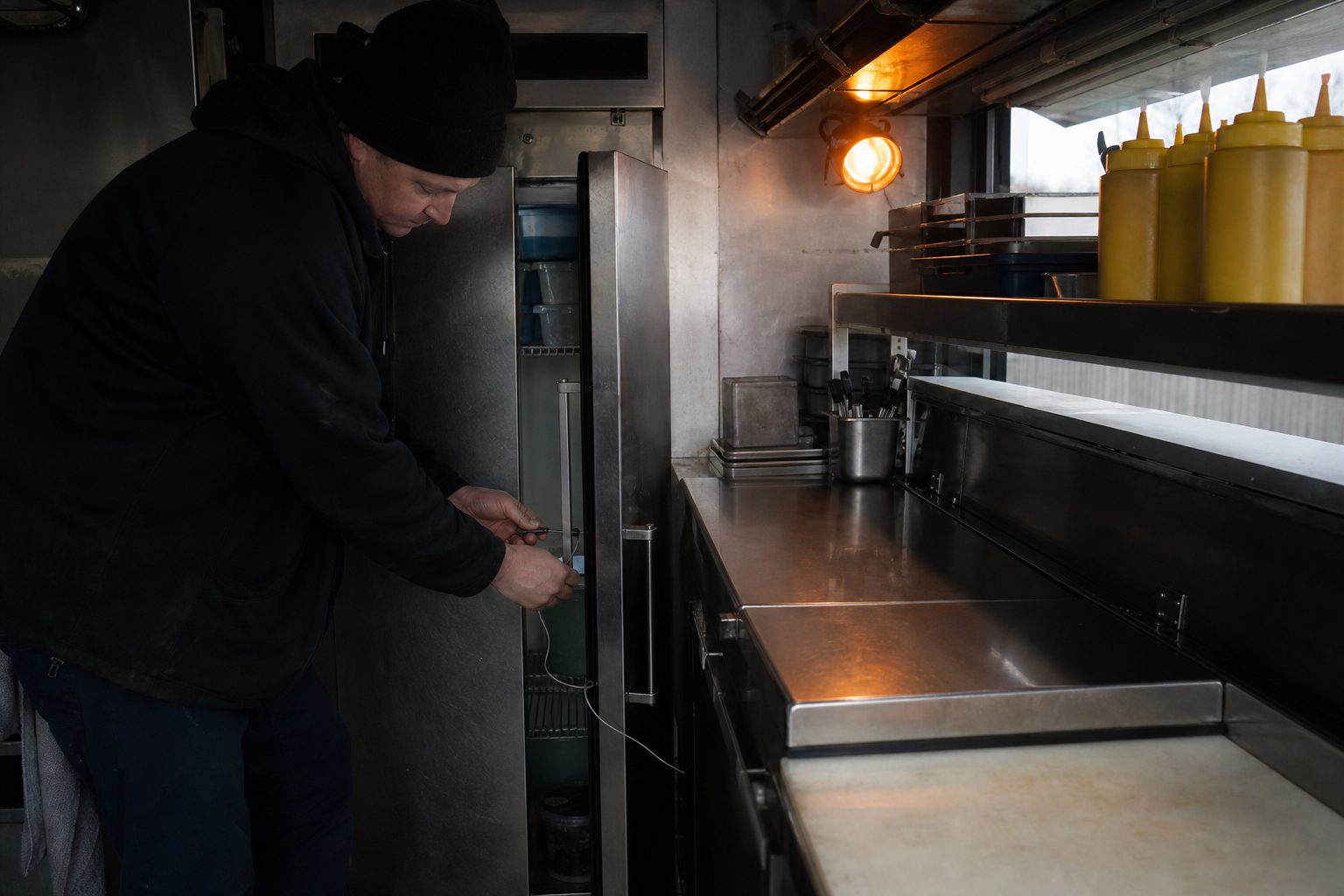
Where the fire marshal fits alongside the health department
Every food truck operator knows the drill: the health department checks your temperature logs, handwashing sink, and food storage. But the fire marshal runs a different inspection with its own checklist. Their job is to verify compliance with fire codes that protect not just your crew, but also your customers and the public. This inspection focuses on your gas systems, suppression equipment, and how you store and use fuels.
Passing the health inspection does not clear you with the fire marshal. In most cities, you need both approvals to operate legally. Some jurisdictions require a fire marshal sign-off before you can even schedule your health department appointment. Fire inspections often recur annually, but some cities require them more often or before every major event.
Understanding this parallel process helps you plan. Being caught with a lapsed fire tag or a missing extinguisher can mean a forced shutdown, even if your food safety record is spotless. The fire marshal's checklist is short, but each item ties directly to a written code or recognized standard.
Keep reading: Food Truck or Concession Trailer: Cost, Permits, and Parking
NFPA 96 in plain language: hoods, ducts, and the Class K extinguisher
The primary standard for cooking ventilation and fire safety is NFPA 96. This code covers every truck with a fryer, grill, or griddle that produces grease-laden vapors. The fire marshal checks that you have a properly sized hood over your cooking equipment. The hood must connect to a duct that vents to the outside, ideally above the roofline, not out the side window.
Grease filters inside the hood catch particles before they enter the ductwork. These must be metal, removable, and cleaned regularly. The fire marshal will check for excessive buildup and make sure the filters are correctly installed. If any filter is missing or replaced with a makeshift screen, that is a violation.
The Class K extinguisher requirement
Every food truck with deep fryers or grills must carry a Class K fire extinguisher. This type is formulated for cooking oil and grease fires. The extinguisher should be mounted in an accessible location, usually near the service window but not directly above the cooking line. It must have a current inspection tag, showing annual service by a licensed technician. Some cities require a second, smaller extinguisher (ABC type) for electrical or paper fires, but the Class K is non-negotiable around hot oil.
Automatic suppression systems and the six month service tag
Most food trucks with fryers or flat tops are required to have an automatic fire suppression system built into the hood. These systems release a special wet chemical when a fusible link melts or a manual pull station is triggered. The agent blankets the cooking surfaces and shuts down the propane supply, choking off the fire before it can take hold.
The fire marshal will check that your suppression system covers all appliances producing grease vapors. They look for clear spray nozzles, intact pull stations, and an unbroken safety wire on each fusible link. The system must also be serviced by an authorized company every six months. You need a current inspection tag, usually hanging right on the system, to pass. If the tag is missing, expired, or filled out in pen, you will be cited. Keep your service receipts in the truck in case the marshal asks for more documentation.
Some systems tie directly into your propane solenoid valve. When the suppression system activates, it automatically shuts off gas flow. The inspector may check this interlock by asking you to perform a test, so know where your override and reset switches are located. If your truck has been modified or new equipment added, your suppression coverage must be recalculated and inspected before use.
Keep reading: Break-Even Math for a Six-Hour Food Truck Lunch Service
NFPA 58 basics: cylinder mounting, hoses, regulators, and clearances
Propane is the most common fuel for food trucks, but it comes with strict rules under NFPA 58. This standard covers how cylinders are stored, how lines are routed, and what materials can be used. The fire marshal pays special attention to these details, since a propane leak is the fastest way to a catastrophic fire.
Cylinder mounting
Propane cylinders must be mounted upright, outside the truck body, in a secure metal rack or cage. The mounting must prevent tipping, sliding, or impact. Bungee cords, wire, or rope are not acceptable. Most inspectors want to see a bolted bracket or a welded metal frame, often with a locking bar over the cylinder necks. If your mount is loose or rusted, expect a citation.
Hoses and regulators
Flexible propane hoses must be rated for LP gas, with no visible cracks, kinks, or dry rot. Inspectors look for date codes stamped along the hose; most recommend replacing any hose over five years old. All connections need to be tight, with no evidence of leaks or makeshift repairs. Regulators must be mounted above the cylinder valves, not dangling by the hose, and must have a rain cap to keep out water.
Minimum clearances
There must be at least 10 feet from any propane cylinder to an ignition source, such as your generator or external electrical panel. Cylinders cannot be stored inside the cooking area or beneath windows that open. In a tight metro setup, this can be a challenge, but the rule is not negotiable. The inspector will measure clearances, so plan your layout accordingly.
Leak testing a propane system with soapy water before every service
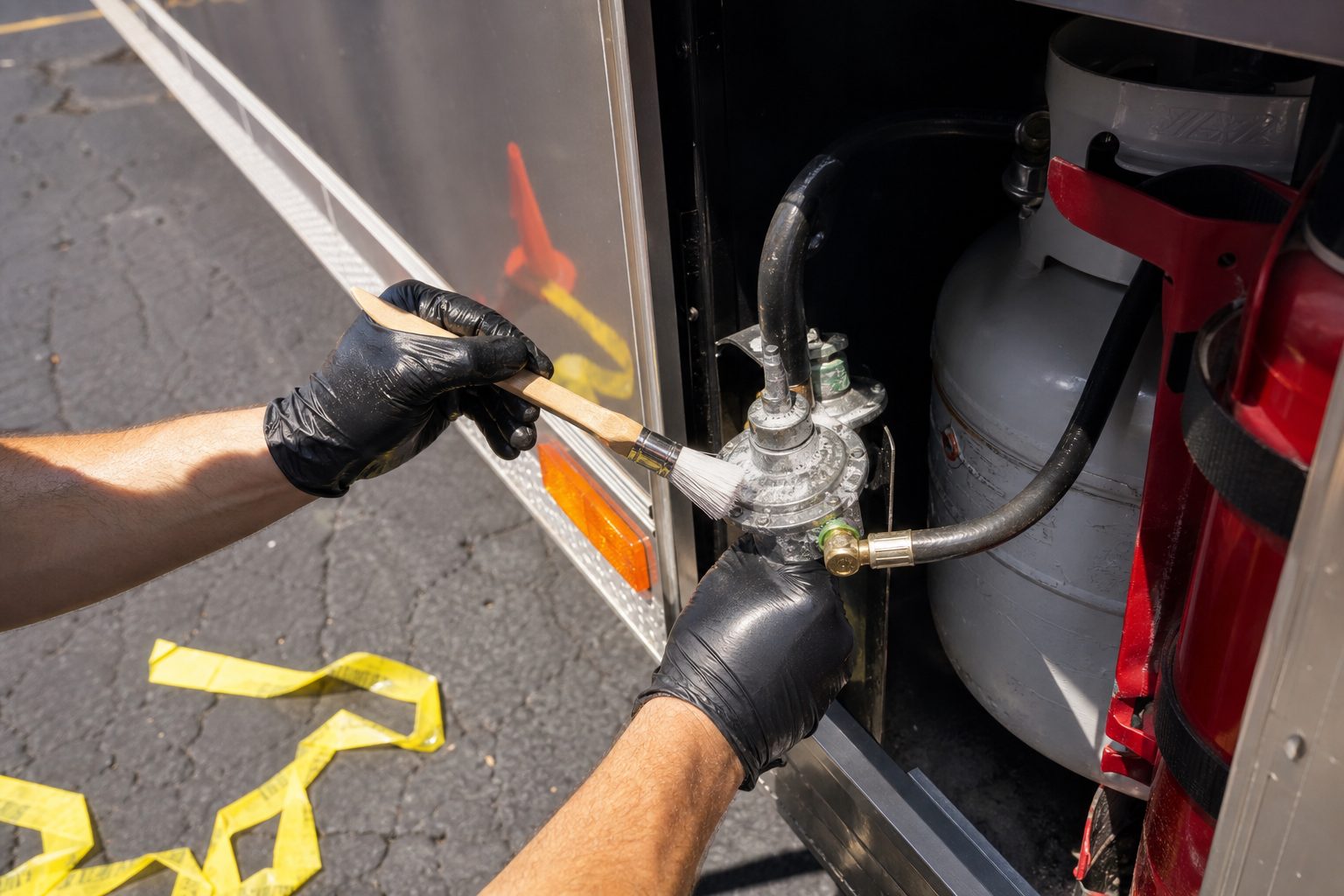
One of the simplest safety routines is the soapy water test. Before opening for service, every operator should check all propane connections, at the cylinder, regulator, and appliance, using a spray bottle with a dish soap and water mix. Bubbles indicate a leak. This check is required by code in some states and strongly recommended everywhere.
Inspectors often ask when you last performed a leak test. Some will watch you do it or request to see your daily safety log. Make this a pre-shift habit. Replace any gasket or fitting that bubbles, even if the leak is slow. Never use a lighter or open flame to check for gas leaks. A documented leak check can help if you are ever questioned after an incident.
After any cylinder swap or hose replacement, repeat the soapy water test before lighting any burners. This is often where leaks appear, especially if fittings are cross-threaded or over-tightened. Carry spare washers and a wrench kit so you can fix issues on the spot and avoid service interruptions.
See how CurbsideDrop handles this for food trucks and street food
Generator placement, fuel storage, and exhaust clearance from the window
Generators are common on food trucks, but their placement affects both fire code and air quality. The fire marshal checks that your generator sits outside the truck, ideally in a ventilated box or on a slide-out tray, never inside the kitchen. The exhaust pipe must be directed away from service windows and customer queues to prevent carbon monoxide exposure.
Fuel for the generator, whether gasoline or diesel, must be stored in an approved container, outside the cooking area, and away from propane cylinders. Inspectors look for labeled, sealed containers with no evidence of leaks or excessive spillage. Never refill the generator while it is running or hot; this is a frequent cause of burns and flash fires.
There should be at least 12 inches clearance between the generator exhaust and any opening into the truck. If your truck parks near buildings or other vehicles, make sure the exhaust does not blow directly toward entrances or air intakes. Some fire marshals measure this gap and may require a heat shield or extension pipe to maintain proper clearance.
In high-traffic festival settings, cordon off your generator area with cones or barriers to prevent accidental contact. Many inspectors look for signage warning of hot surfaces and moving parts. This is not just about passing inspection; it reduces the risk of injury claims or shutdowns during busy events.
Walking an inspector through the truck without losing a service day
Inspections can feel adversarial, but most fire marshals want you to succeed as long as you follow the rules. Preparation is the key to a smooth walkthrough. Clean and organize the truck before the scheduled inspection. Make sure all required paperwork is on hand: suppression system tags, extinguisher records, and any service receipts. Label all shutoff valves and post clear safety instructions near each station.
When the inspector arrives, walk them through the truck step by step. Start at the propane cage, then move to the hood system, suppression pull stations, extinguisher mounts, and finally the generator placement. Answer questions directly, and offer to demonstrate leak testing or system shutdowns if asked. If you do not know an answer, say so rather than guessing. The inspector will appreciate honesty and effort over bluffing.
If you receive a citation or correction notice, do not argue on the spot. Take notes and ask for clarification in writing, if needed. Many issues can be fixed within a day or two, and most marshals will offer a prompt re-inspection. The goal is to avoid a prolonged shutdown, which can cost hundreds or even thousands in lost sales for every day off the street.
After passing, keep your inspection records in a waterproof folder inside the truck. Some operators scan their documents and store digital copies as well. If you move between cities or counties, review the local code each time. Requirements are similar nationwide, but enforcement details can vary by inspector or event organizer. A checklist and routine maintenance log go a long way toward staying compliant and confident on inspection day.
Staying on top of fire safety standards is an ongoing effort, not a one-time hurdle. The best operators integrate these checks into their daily routines, from leak testing to recordkeeping. Tools that help you organize daily tasks, including location posts, safety checks, and menu updates, make compliance part of your everyday workflow, not an afterthought.